The Role of Sound Design in Casual Games
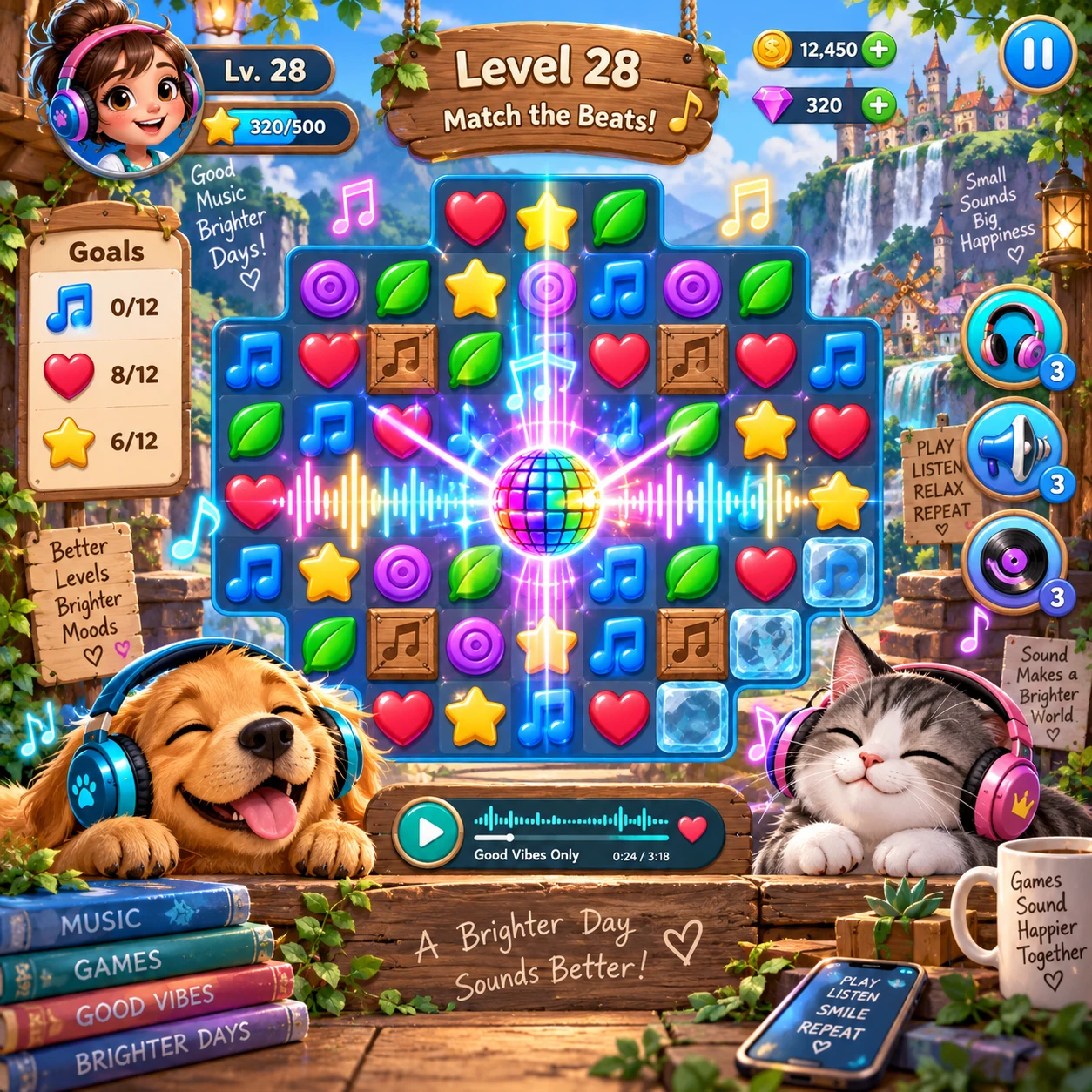
A satisfying match, a bright reward chime, or a gentle musical loop can make a casual game feel welcoming from the first tap. Sound design shapes how players read the screen, understand game mechanics, and respond to each small success or setback.
In casual games, audio has to work quickly. Players may be fitting a level into a short break, playing on a phone in a noisy room, or keeping the sound off altogether. Thoughtful design accounts for all of these situations while giving a game its own character. It can also help a promotional clip communicate that character, provided the audio reflects the experience players will actually find.
What sound design means in casual games
Sound design in casual games is the planned use of sound effects, background music, and audio cues to support gameplay and set the mood. These elements work alongside visuals and game mechanics to help each interaction feel clear and coherent.
A casual game’s audio might include a tap sound for a button, a soft pop when pieces disappear, music that loops during a level, and a distinctive cue when a player earns a reward. Each sound has a job. Some communicate information; others create atmosphere or add texture to an otherwise quiet screen.
Good design depends on the relationship between those parts. A useful cue needs to stand out from background music without becoming irritating after dozens of repeats. A reward sound should feel positive, but it should also fit the game’s visual style. If a calm puzzle uses loud arcade effects, the mismatch may make the whole experience feel less polished.
Think of casual-game audio as a small vocabulary. The player learns what its sounds mean through repeated interactions, even if the game never explains them in words.
How audio cues help players understand gameplay
Audio cues help players understand gameplay by signaling actions, progress, rewards, and mistakes at the moment they happen. They add immediate player feedback, so people do not have to rely on visual changes alone.
When a player taps a tile, a brief sound can confirm that the game registered the input. A rising sequence may signal progress, while a distinct completion flourish can mark the end of a level. A softer, lower sound might indicate an invalid move or a missed opportunity. In each case, sound gives an action a clear consequence.
This is particularly useful on small mobile screens, where animations and interface details can be easy to miss. Audio can reinforce what the player sees, but it should not carry essential information by itself. Someone playing with the sound muted still needs a visible indication that a move worked or a level ended.
- Action cues confirm taps, swaps, or other player inputs.
- Progress cues communicate a combo, milestone, or changing game state.
- Reward cues make earned items, points, or level completion feel distinct.
- Error cues identify an unsuccessful action without making it feel punishing.
Consistency matters more than complexity. If the same kind of event produces the same kind of sound, players can learn the audio language quickly. Too many similar cues, on the other hand, blur together and make feedback harder to interpret.
Music and effects that shape the mood
Background music and sound effects shape a casual game’s mood by setting an emotional pace and giving its world a recognizable tone. Light percussion might make a level feel energetic, while soft melodies and restrained effects can support a more relaxed puzzle experience.
Music also helps fill quiet moments between player actions. A short, well-designed loop can make a level feel inviting without demanding attention. Because casual games often involve repeated play, the arrangement should leave space for sound effects and avoid a melody that becomes tiring too quickly. Volume, tempo, instrumentation, and loop length all affect how the music feels over time.
Effects can reinforce that mood. A crisp pop may suit a colorful match game; a gentle sparkle may fit a cozy collection game. These choices are subjective, so teams benefit from testing audio with actual gameplay rather than judging each sound in isolation. A sound that feels charming once may become distracting after repeated use.
There is a trade-off between a strong audio identity and long-term listening comfort. Distinctive sounds can help a game stand out, but they need enough restraint to remain pleasant during extended sessions.
Sound design and player engagement
Responsive, consistent sound design can make gameplay feel more satisfying by connecting a player’s action to clear feedback. It supports engagement through moment-to-moment clarity and mood, though it cannot guarantee that people will keep playing.
When a tap triggers an immediate response, the game feels attentive. When a sequence of actions builds into a musical or rhythmic payoff, progress can feel more rewarding. These small responses help casual games make ordinary interactions feel complete, especially in short sessions where each move matters.
Audio can also strengthen familiarity. Players may begin to recognize a game through its signature sounds, such as a particular confirmation tone or level-completion melody. That recognition is useful only when the sounds remain consistent and the broader game experience delivers on the same tone.
More sound is not always better. Constant effects can compete with music, overwhelm players, or make a game unpleasant to use in public. A practical approach is to ask of every sound: Does it clarify an event, improve the atmosphere, or provide a meaningful reward? If it does none of those things, it may be clutter.
Designing audio for mobile play
Mobile-game audio should work in short sessions, offer clear controls, and remain understandable when muted. Players use phones in many settings, so sound design needs to respect both their attention and their environment.
Keep important cues brief and easy to distinguish. Avoid making a player wait through a long sound before they can take another action. Provide separate controls for music and sound effects when possible, along with a straightforward mute option. Someone may enjoy the music but want to disable repeated effects, or prefer effects while turning off the soundtrack.
Muted play deserves equal care. Visual animation, icons, text, or vibration can reinforce essential feedback, depending on the game and device. Do not use vibration as a substitute that every player can rely on: people can disable it, and it may not suit every context. The aim is to preserve gameplay clarity across sound settings.
Test on phone speakers and headphones, at different volume levels, and during realistic play. A mix that sounds balanced in a quiet studio may bury important cues on a small speaker or become harsh through earbuds. Make sure the first few minutes teach the game’s audio language without requiring players to turn the sound on.
Using sound to support game promotions
Sound can help game promotions convey a casual game’s character by pairing its real gameplay visuals with recognizable music and effects. Promotional audio should set expectations accurately rather than imply features or rewards that the game does not offer.
A short gameplay preview can use a tap, a match, and a level-completion cue to show how play feels. A calmer title might benefit from quieter music and unhurried pacing; a lively arcade-style game may suit brighter effects. In both cases, the clip should feature sounds that players can encounter in the game, not an unrelated soundtrack that creates a misleading impression.
Promotions also need to account for how people browse. Many viewers watch mobile ads or social clips with audio muted, so captions and clear visual action should carry the core message. Audio can add personality when enabled, but it should not be the only way viewers understand what the game is.
For game promotions, the useful test is simple: does the sound help someone imagine the actual play experience? If it does, audio strengthens the preview. If it exaggerates the game’s pace or reward loop, it may attract attention while setting the wrong expectation.
Frequently asked questions
What is sound design in a casual game?
Sound design in a casual game is the creation and arrangement of its music, sound effects, and audio cues. It supports gameplay feedback, communicates events, and helps establish the game’s atmosphere.
How do sound effects help players during gameplay?
Sound effects confirm actions and signal events such as progress, rewards, and mistakes. They make feedback more immediate, while visual cues should still communicate essential information for players who have muted the game.
Should casual games be enjoyable with the sound off?
Yes. Players should be able to understand the game’s mechanics and make progress without sound. Music and effects can add mood and satisfaction, but they should not be required to identify important events.
How can audio support a game promotion?
Audio can give a preview a sense of pace and personality by using music and effects that match real gameplay. Clear visuals and captions should communicate the main message as well, since many viewers watch promotional clips with sound off.