In-Game Purchases: Ethical Considerations and Best Practices
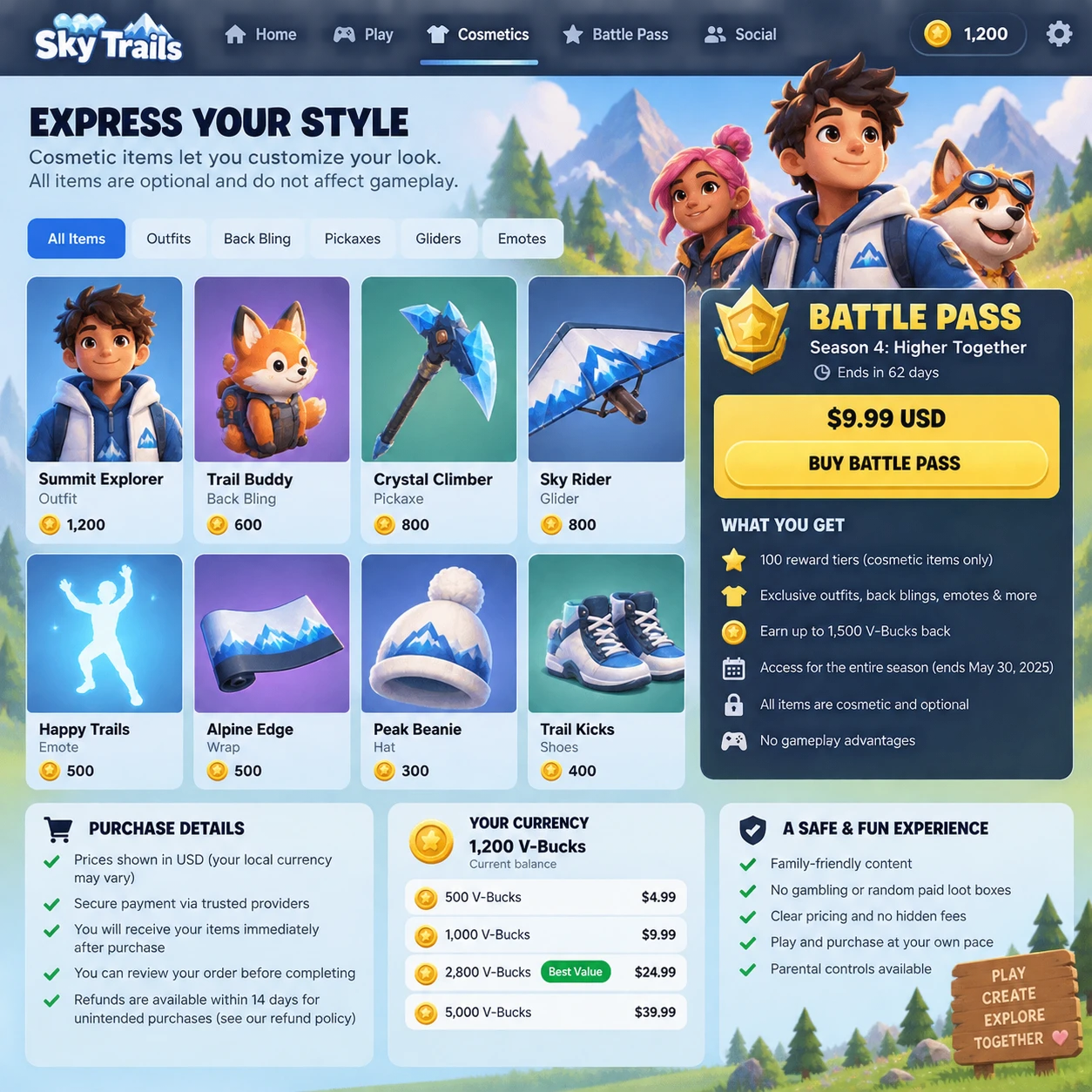
In-game purchases can fund ongoing development, add optional customization, and give players new ways to engage with a game. They can also create confusion or pressure when prices, odds, renewal terms, or spending controls are hard to understand. Ethical practice starts with a simple test: can players see what they are buying, what it costs, and whether they can comfortably say no?
For developers and game-promotion teams, clear offers build trust over time. For players and parents, knowing how microtransactions work makes it easier to decide which purchases fit their budget and preferences.
What counts as an in-game purchase?
An in-game purchase is any paid item, feature, or benefit bought through a game, including cosmetic items, loot boxes, and battle passes. Promotions may present these options through a store, event, limited-time offer, or platform marketplace.
Common purchase models differ in what players receive and how predictable the value is:
- Cosmetic items: Skins, outfits, emotes, and other visual changes that usually do not affect gameplay power. Their appeal is personal expression, though limited availability can still create pressure to buy quickly.
- Loot boxes: Packages containing randomized rewards. A player may know the possible items but not which item they will receive, making the outcome less certain than a direct purchase.
- Battle passes: Progression tracks that offer rewards as players complete in-game tasks. Some are free, while paid tiers may include additional rewards or faster access. Players should check the season length and what happens to unclaimed rewards when it ends.
- Direct purchases: A specific item, currency bundle, or expansion sold for a stated price. The player can usually see what they will receive before paying.
These models can serve different player preferences. A direct cosmetic purchase offers certainty; a loot box offers chance; a battle pass connects rewards to time and play. The ethical question is not whether a model exists, but whether its cost and conditions are understandable and the choice remains voluntary.
Key ethical concerns for players and developers
The main ethical concerns around in-game purchases are unclear pricing, pressure to spend, randomized rewards, and the risk that younger players may not recognize the real cost. Good design makes these risks visible and gives players room to choose.
Pricing transparency matters when games use virtual currency. If a bundle costs 1,000 coins, show how much currency costs in real money and whether the player must buy more than needed to obtain the item. Bundles that leave a small unused balance can make the next purchase feel easier, even though the original price may be less obvious.
Promotional timers and scarcity claims can also distort a decision. A genuine event end date may help players plan, but repeated countdowns or messages suggesting an item will disappear forever can push people to act before they have considered the cost. Offers should explain what is limited and when the offer ends without overstating urgency.
Randomized rewards raise a distinct concern because players pay without knowing the exact result. The chance of receiving a rare item may be low, and repeated attempts can lead to spending more than intended. Younger players may have particular difficulty evaluating probabilities or connecting virtual currency to real money. These concerns do not make every purchase harmful, but they call for clear information, accessible controls, and extra care in games aimed at children.
How to make promotions clear and fair
A clear in-game promotion states the real cost, what the player receives, when the offer ends, and any important limits or conditions. If rewards are randomized, explain the odds and how the reward system works before the player pays.
Use a straightforward disclosure checklist before publishing an offer:
- Price: Show the cost in a recognizable currency. If payment uses game currency, make the real-money conversion easy to find and understand.
- Contents: List the included items, tiers, or benefits. Distinguish guaranteed rewards from possible rewards.
- Odds: For randomized rewards, present probability information clearly, close to the purchase decision. Explain what the displayed odds refer to, especially if probabilities vary by item or pack.
- Terms: State the offer period, purchase limits, eligibility rules, renewal details, and any important restrictions.
- Progress requirements: For a battle pass, explain the season deadline and how much play is generally needed to unlock its rewards. Avoid implying that completion is guaranteed for every player.
Place the key facts where players make the decision, rather than hiding them behind several menus. A short summary can link to fuller terms, but it should not replace the essential price and reward information. For a general overview of consumer guidance on online disclosures, see the U.S. Federal Trade Commission’s guidance on online advertising. Rules vary by location, so teams should seek appropriate legal advice for their markets.
Best practices for responsible purchase design
Responsible purchase design gives players meaningful choices, avoids coercive prompts, and makes spending controls easy to find. It can still support promotions and revenue, but should not depend on confusion or repeated pressure.
Start with the offer itself. Sell cosmetic items directly when possible, and distinguish gameplay advantages from appearance-based rewards. When a game includes randomized rewards, disclose the odds and avoid presenting repeated purchases as the only practical path to a desired item. A guaranteed purchase option can provide an alternative for players who value certainty.
Design the purchase flow around informed consent:
- Show the final price and item contents before the confirmation step.
- Use neutral language rather than guilt, shame, or messages that imply a player is letting a team down by declining.
- Do not make the decline option hard to find or repeatedly interrupt play with purchase prompts.
- Offer spending limits, purchase history, and optional confirmation steps that players can access without searching through unrelated settings.
- Make parental controls understandable and available at the account or platform level where supported.
Accessibility matters, too. Important prices, odds, and controls should be legible, clearly labeled, and usable with the game’s supported input methods. Safeguards can add a little friction to checkout, but that is a reasonable trade-off when they help prevent accidental purchases or give families more control.
Helping players make informed decisions
Players can make better purchase decisions by setting a budget, checking the exact contents of an offer, and using available spending safeguards. Parents can add account-level controls and discuss how virtual currency relates to real money.
A simple pause-and-check routine helps before buying:
- Set a limit: Decide on a monthly or seasonal amount before opening the store. Treat virtual currency as money already spent, not as a free balance.
- Check the item: Confirm whether the purchase is a direct item, a randomized reward, or a progression pass. For a battle pass, consider whether there is enough time to earn the rewards you want.
- Review the terms: Look for expiry dates, renewal conditions, purchase limits, and refund information provided by the game or platform.
- Use controls: Enable parental controls, password requirements, spending limits, or purchase approvals where available. Check them after account or device changes.
- Wait when pressured: If a countdown or message is making the decision feel urgent, step away and review the offer calmly.
Parents can also talk with children about asking before spending, checking receipts, and distinguishing earned game rewards from paid content. Controls vary across games and platforms, and they may not cover every payment method, so reviewing the relevant account settings remains useful.
Balancing promotional goals with player trust
Promotional offers can support player engagement when they are relevant, clearly priced, and easy to decline. Trust is more durable when players understand the offer and feel that the game respects their time and budget.
Teams can assess a promotion with a three-part test: clarity, choice, and consequence. Clarity asks whether the price, contents, odds, and terms are visible. Choice asks whether players can decline without repeated prompts or loss of ordinary access. Consequence asks whether the offer creates avoidable harm, such as encouraging excessive spending or setting unrealistic expectations about rewards.
Promotions should also be evaluated beyond immediate sales. Monitor player questions, complaints, refund patterns, and reports of accidental purchases alongside conversion metrics. A high purchase rate alone does not show that an offer was understood or welcomed. If players repeatedly misunderstand a currency bundle or battle-pass deadline, revise the presentation rather than assuming the audience failed to read it.
Responsible game promotions can still create excitement around new cosmetic items, seasonal content, and special events. The standard is straightforward: make the value legible, keep the decision voluntary, and provide stronger safeguards where younger or vulnerable players may be involved.
Frequently asked questions
Are in-game purchases always optional?
No. Many are optional additions, but some games place paid content alongside progression or features that affect access and convenience. Check whether a purchase is needed to continue, compete, or use a particular feature before paying.
What makes a loot box ethically concerning?
A loot box can be concerning when players cannot see clear odds, when repeated attempts encourage overspending, or when the system is difficult for younger players to understand. Clear probabilities and spending controls help, though they do not remove every concern.
How can parents manage children’s in-game spending?
Review parental controls and payment settings, set spending limits or purchase approvals where available, and discuss the real-money cost of virtual currency. Check purchase history and receipts regularly, since settings differ by game and platform.
What should a clear in-game promotion disclose?
It should show the real price, what is included, any relevant odds, offer dates, purchase limits, and conditions such as battle-pass deadlines or renewal terms. Put the essential details close to the purchase button.